Preparing an Aerobic Septic System for a North Texas Cold Snap
North Texas winters are mostly mild, which is exactly why cold snaps cause so much trouble. A hard freeze arrives a few times each winter, occasionally severe, and aerobic septic systems — common throughout Denton, Collin, Grayson, Dallas, Rockwall, Fannin and Hunt counties — have components sitting above ground or close to it that simply are not built for extended sub-freezing weather.
An hour of preparation in October prevents the kind of failure that is genuinely unpleasant to deal with in January.
Why aerobic systems are more exposed than conventional ones
A conventional septic system is essentially all buried — tank, lines, drain field — and soil is a decent insulator. An aerobic treatment unit has more moving parts, and several of them are vulnerable:
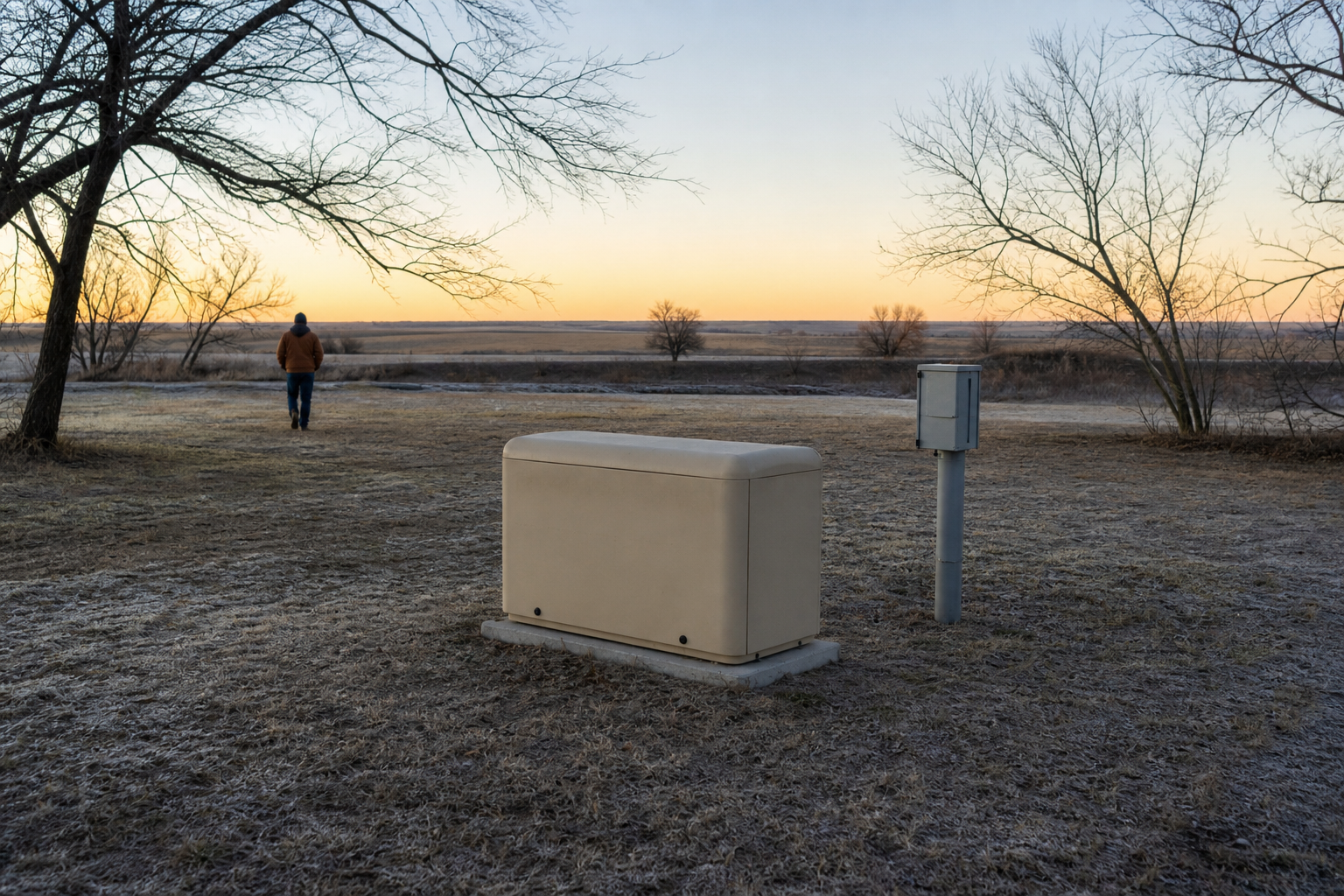
The air compressor or blower usually sits above ground in a housing. It runs continuously to supply oxygen to the treatment process, and if it stops in cold weather the treatment process degrades.
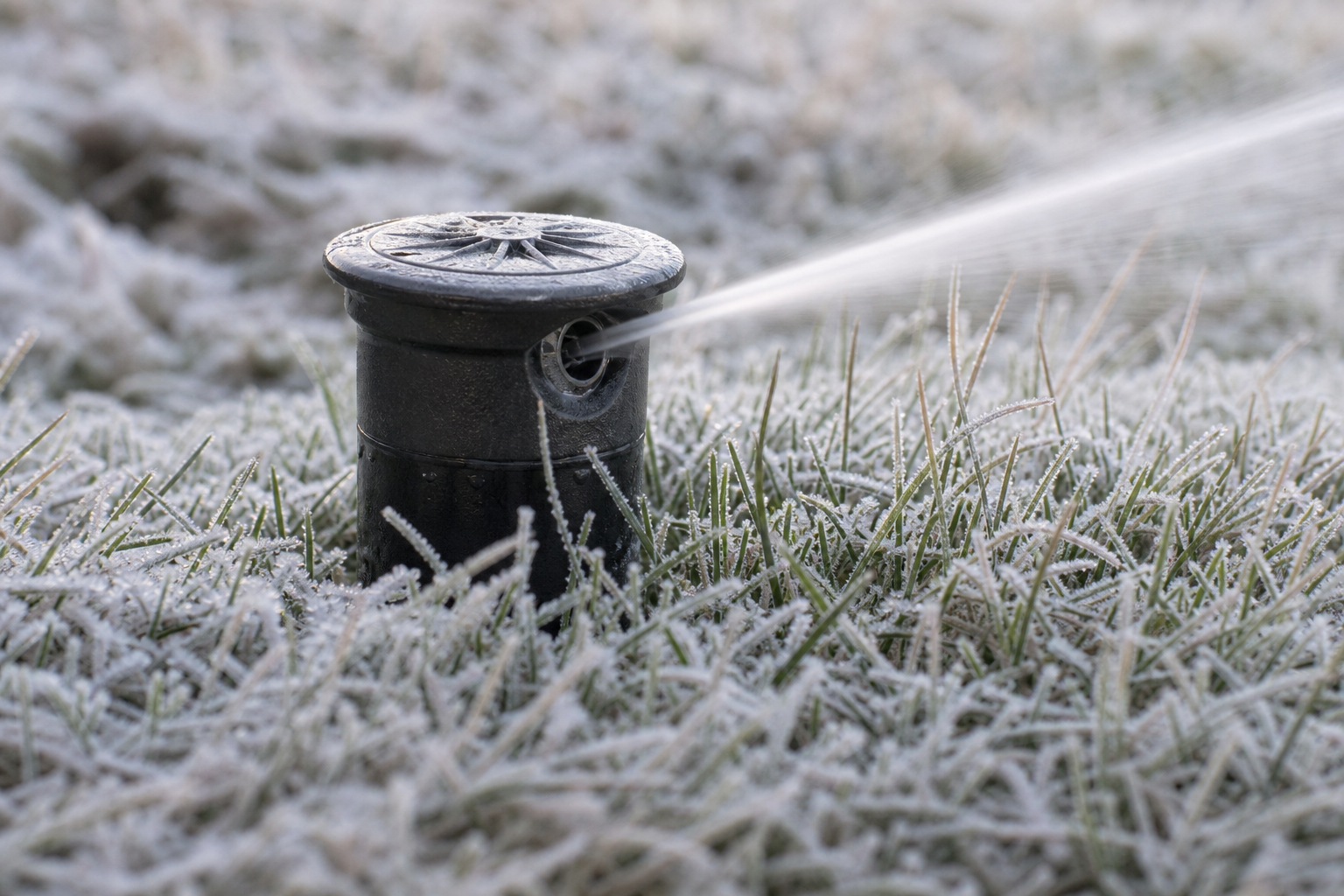
Spray heads and irrigation lines on a surface application system are shallow by design. Water in an exposed line freezes, and freezing water expands and splits pipe and heads.
Pumps, floats and control panels are components that can fail in extreme cold or during the power outages that often accompany a severe winter storm.
The chlorinator on a disinfection system needs to remain functional and accessible.
The 2021 winter storm made this concrete for a lot of North Texas homeowners: several days of hard freeze combined with power outages did real damage to systems that had never had a problem.
The fall checklist
Check that the compressor is running properly. It should be operating and moving air. If it sounds different than it used to, or the housing is damaged, deal with it now. Make sure the housing is intact and the air intake filter is clean — a restricted intake makes the unit work harder.
Confirm your electrical is solid. Aerobic systems depend on power. Check that the breaker is not tripping intermittently, connections are sound, and the control panel is dry inside. If your alarm has been ignored or muted, get it working — a functioning alarm is the early warning that prevents a small failure from becoming a backup.
Insulate what is exposed. Above-ground components benefit from insulation, provided you do not block the compressor's air intake or ventilation. Shallow lines can be protected with mulch or straw cover. This is straightforward work and highly effective.
Locate and clear access to tank lids. If service is needed during a cold spell, the technician needs to reach the tank. Make sure lids are findable and not buried under a new flower bed, and confirm they are secure — an unsecured septic lid is a serious safety hazard.
Inspect spray heads and lines. Look for cracked heads, leaks, and heads buried by grass or landscaping. Damage found in October is a cheap repair; the same damage found in January is an emergency.
Get a pump-out if you are due. Solids accumulate regardless of season. A tank that is overdue is more likely to cause problems during a period of heavy household use — which is precisely what the holidays are.
Your maintenance contract matters more than you think
Texas requires aerobic treatment systems to be maintained, and for most homeowners that means a maintenance contract with a licensed maintenance provider covering scheduled inspections and servicing. The TCEQ notes that, two years after initial installation, homeowners may perform their own maintenance on certain system types — including secondary treatment systems, non-standard treatment systems, drip irrigation and surface application disposal — but requirements vary and your county's permitting authority sets the specifics for your permit.
The practical point is this: if your contract has lapsed, or you have been self-maintaining without really doing the maintenance, fall is the moment to correct it. A licensed provider performing a scheduled visit will catch the things on this list that a homeowner walkthrough misses.
During a hard freeze
When a serious cold snap is forecast, a few habits help:
Use water normally. A modest, steady flow of warm household water through the system actually helps, because the effluent entering the tank is warm. A system with no flow at all — a house left empty over a holiday during a freeze — is more likely to have trouble.
Do not dump large volumes at once. Several loads of laundry back to back is hard on a system in any season and worse when it is stressed.
Leave the compressor running. It is tempting to shut things off during a storm. Do not turn off the aerobic unit — the treatment process depends on it.
Watch for alarms. If the alarm activates during or after a freeze, do not ignore it. It may be a frozen line, a failed pump, or a power interruption that needs a reset.
Know your power situation. If your area loses power, the system stops treating. A prolonged outage is a good reason to reduce water use until power returns.
After the cold passes
Once temperatures come back up, walk the system. Look for leaks at spray heads and lines that may have split while frozen, listen for the compressor, and check the control panel for fault indications. Freeze damage frequently does not reveal itself until the thaw, when a cracked line starts leaking.
Small effort, large payoff
None of this is complicated. Check the compressor, confirm the power, insulate the exposed parts, clear access, and get current on maintenance. An afternoon in October against a failed system during a holiday cold snap is not a close comparison.
Total Septic provides septic installation, repair, inspection, pumping and maintenance across Collin, Grayson, Dallas, Denton, Rockwall, Fannin and Hunt counties, including McKinney, Anna, Melissa, Celina, Aubrey, Allen, Rockwall, Van Alstyne, Gunter and Flower Mound. If you would like your aerobic system checked over before the first freeze, request service here.
