What Fall Rain Reveals About a Failing Drain Field Near Fannin County
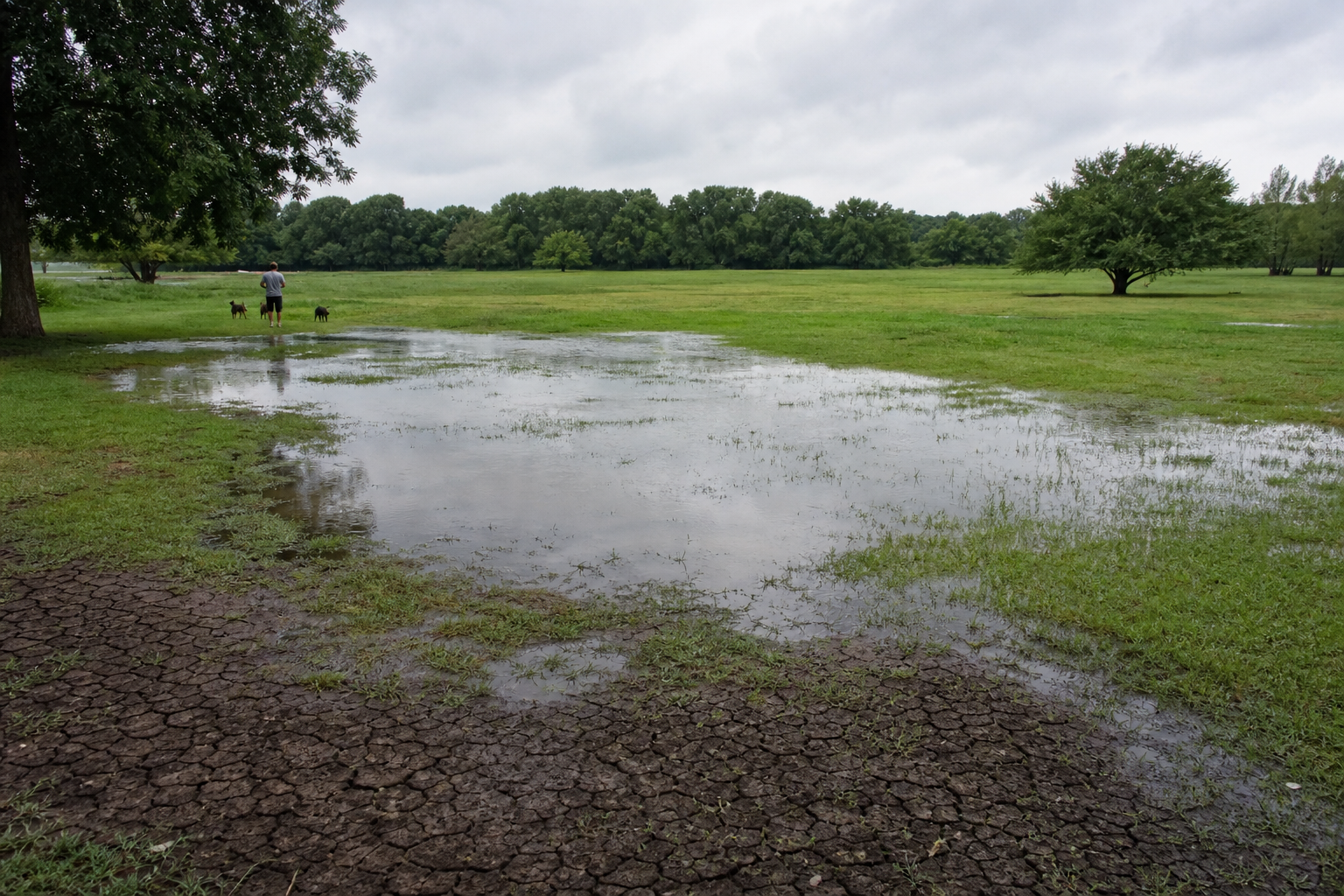
North Texas summers are hard on septic systems in a way that is easy to miss, because the symptoms often do not appear until the weather changes. Months of heat and dry soil hide problems. Then the fall rains arrive, the ground takes on water, and a drain field that had been quietly struggling has nowhere left to put anything.
That is why so many drain field failures in Fannin County and the surrounding area get discovered in the fall. The field did not break when it rained — the rain simply removed the last of its margin.
What the drain field is actually doing
The tank separates solids and holds them. Everything after that depends on the drain field, where liquid effluent moves out through the trenches and into the soil, and the soil does the final treatment as the water percolates down.
That process requires unsaturated soil beneath the field. Soil that is already full of water cannot accept more, and the treatment does not happen properly. So a drain field's capacity is not fixed — it varies with how wet the ground is.
Why fall exposes what summer hid
The soil column fills up. After a dry summer, the ground has capacity to spare and even a marginal field performs adequately. Once fall rain saturates the upper soil, that reserve disappears and the field has to do the job on its own merits.
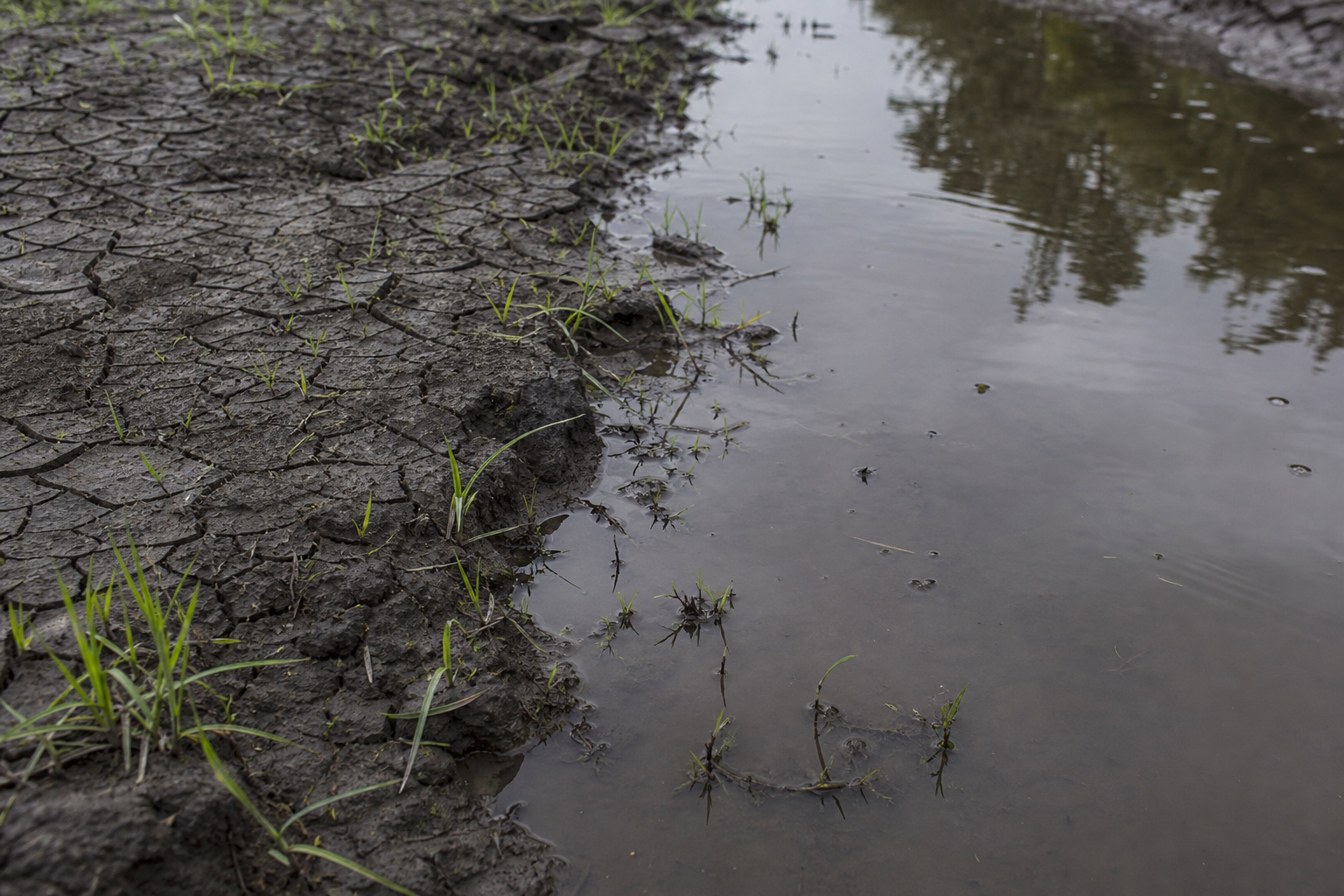
Clay soil moves. Much of North Texas has expansive clay that shrinks in drought and swells when it takes on water. That movement is hard on buried infrastructure — it stresses pipe joints and connections, and can shift lines out of alignment. A dry summer followed by heavy rain is exactly the cycle that reveals a cracked or separated line.
Surface water finds the field. Runoff that ran off harmlessly in July now flows across saturated ground. If your site sheds water toward the drain field, the field is receiving both effluent from the house and rainfall from the yard.
Household use goes up. Fall and winter mean more people at home, more guests, more laundry. Demand rises exactly when field capacity falls.
The signs worth acting on
Soggy ground or standing water over the drain field, particularly when the rest of the yard has dried. This is the clearest signal. Effluent surfacing is a health hazard — keep people and pets off it.
Odor outdoors. A sewage smell near the tank or field means something is escaping that should not be. Not a wait-and-see symptom.
Grass that is greener over the field. A distinctly darker, faster-growing strip over the trenches indicates effluent near the surface.
Slow drains throughout the house. One slow fixture is a fixture problem. Several at once is a system problem.
Gurgling in drains or toilets, especially after heavy use.
Backups into the lowest fixtures in the house.
Symptoms that follow the rain. If everything works in a dry week and struggles after a storm, that pattern is itself the diagnosis: the field is at the edge of its capacity and saturation pushes it over.
Things that are not the field's fault
Before assuming the worst, note that several fixable issues produce similar symptoms:
- An overdue tank. When solids accumulate too high, they carry over into the drain field and clog the soil — which is how a maintenance lapse turns into field damage. Regular pumping is the single most effective thing you can do to protect a field.
- A failed pump or float in systems that pump to the field.
- A crushed or separated line between tank and field, sometimes from vehicle traffic or clay movement.
- Root intrusion from trees planted too close.
- Surface water being routed onto the field, which is a grading fix, not a septic replacement.
This is why a proper diagnosis matters. Replacing a drain field is a major expense, and it is worth knowing for certain that the field is the problem before you spend on one.
What you can do this fall
Keep water off the field. Check where downspouts discharge and where the yard sheds. Redirecting runoff away from the drain field is often the cheapest meaningful improvement available.
Keep weight off the field. No vehicles, trailers, equipment or livestock. Compacted soil over a drain field reduces its ability to accept water, and the damage is not easily undone.
Watch the trees. Roots seek water and moisture, and a drain field is an attractive target.
Spread out water use. Laundry across the week rather than six loads on Saturday. This matters more when the ground is already wet.
Get on a maintenance schedule. Pumping intervals depend on tank size and household size, and aerobic systems have their own required servicing. If you cannot remember your last pump-out, you are due.
If the field really has failed
Sometimes the field genuinely is at end of life — the soil has become clogged with biomat over many years, or the system was undersized or poorly sited to begin with. In that case the path forward runs through your county permitting authority: a site evaluation and soil assessment, a design suited to the site, permitting, and installation.
It is not a quick process, which is a further argument for identifying the problem in the fall rather than in the middle of winter.
Total Septic handles septic inspections, repairs, drain field replacement, installation, pumping and maintenance across Collin, Grayson, Dallas, Denton, Rockwall, Fannin and Hunt counties. If you are seeing wet ground, odor or slow drains after the recent rain, get in touch here and we will find out what is actually happening before anyone talks about replacing anything.
